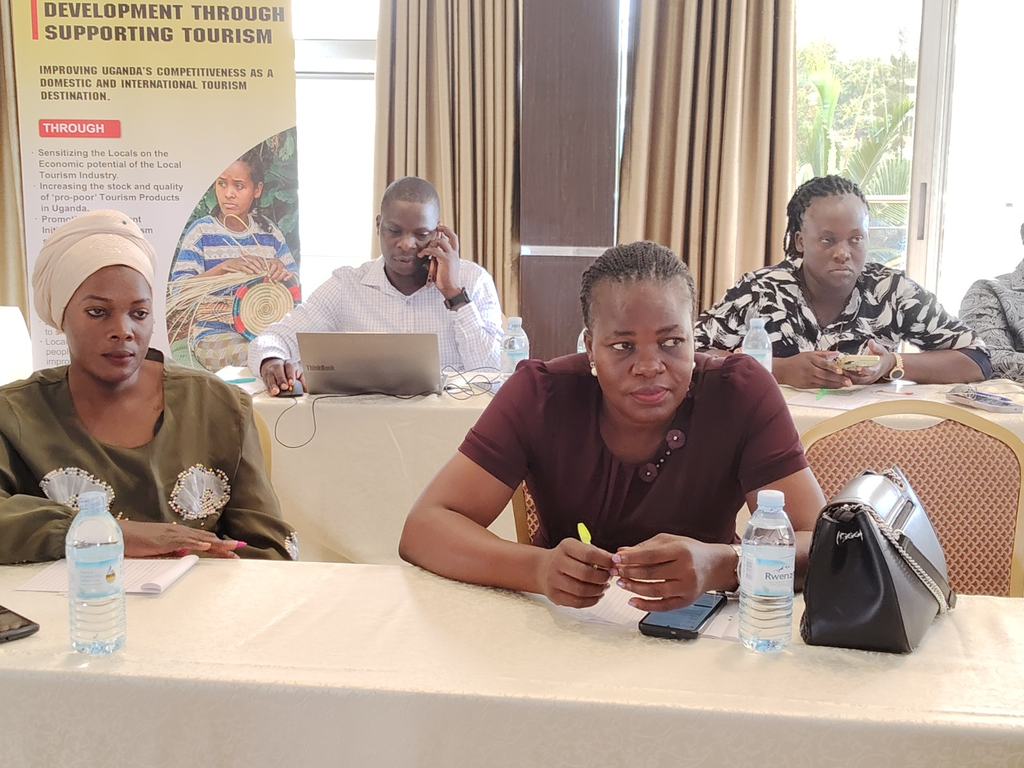

Jinja City, 29 September 2026 – The Assistant Commissioner in the Department of Local Economic Development at the Ministry of Local Government, Mr. Emmanuel Muhanguzi, has highlighted the opportunities and challenges shaping Local Economic Development (LED) in Uganda, with particular emphasis on the Busoga Sub-Region.
Speaking during the Busoga Sub-Region Capacity Building Workshop, Mr. Muhanguzi explained that the Government adopted Local Economic Development to complement the traditional delivery of public goods and services with a more proactive approach focused on addressing household poverty and improving incomes. He noted that LED brings together Local Governments, the private sector and communities to mobilise, manage and invest resources in economic ventures that stimulate local development and growth.
Mr. Muhanguzi traced the development of LED in Uganda, noting that its promotion was adopted as the sixth objective of decentralisation in 2006, followed by the development of the first LED Strategy in 2007, piloting in selected Local Governments between 2007 and 2009, adoption of the National LED Policy in 2014 and establishment of the LED Department in the Ministry of Local Government in 2019. He further noted the launch of the National Strategy for Local Economic Development in 2022 and the ongoing implementation of the 2025/26–2029/30 National Strategy.
He said LED is influenced by the opportunities and constraints within different localities, including natural resources, human capital, infrastructure, governance systems and strategic location. Uganda has significant opportunities arising from its youthful population, natural resource endowments, strategic position within the Great Lakes and East African Community markets, and the range of Government wealth-creation programmes designed to move households from subsistence into the money economy.
Mr. Muhanguzi also highlighted progress made in implementing LED, including the establishment of policy and institutional frameworks, increased integration of business-oriented planning within Local Governments, strengthening of national and Local Government capacity, development of economic infrastructure and livelihood investments, improved systems for local revenue collection and mobilisation of resources through programmes such as Emyooga, GROW and the Parish Development Model.
Busoga’s Economic Outlook
Turning to Busoga, Mr. Muhanguzi noted that the sub-region has experienced a decline in monetary poverty, from 29.4 percent in 2019/20 to 18.9 percent in 2023/24, according to the figures presented in the workshop. However, he noted that significant vulnerabilities remain, with approximately 840,700 people still living in absolute poverty and a substantial proportion of young people outside employment, education or training.
He identified several persistent challenges affecting economic transformation in the sub-region, including land fragmentation, youth unemployment and over-reliance on sugarcane production. He noted that fluctuations in sugarcane prices and the long production cycles can leave smallholder farmers vulnerable, highlighting the need for diversification and the development of other viable agricultural and economic opportunities.
The presentation also identified weaknesses in agricultural extension services as a major constraint to Local Economic Development in Busoga. These include critical staffing shortages, limited reach to farmers and gaps in grassroots advisory services. The presentation noted that the extension worker-to-farmer ratio across Uganda averages approximately one extension worker to 1,800 farmers, compared to an internationally recommended ratio of one to 500, while some studies in the sub-region indicate that a significant proportion of smallholder farmers have not received direct visits or personalised technical assistance from formal extension agents.
Diversification and Value Addition
Mr. Muhanguzi highlighted the need for Busoga to strengthen diversification, commercial agriculture and value addition. The presentation identified opportunities in high-value crops such as cocoa, coffee and oil palm, alongside farmer-owned processing facilities and other agro-processing investments that can help reduce post-harvest losses and increase the value retained within the local economy.
He also identified key inhibitors to LED in Busoga, including limited extension services, advisory systems that are not sufficiently focused on the transition to commercial farming, land fragmentation, infrastructure gaps, the high cost of credit, limited financial inclusion, weak Local Government capacity to attract public-private partnerships, weaknesses in private-sector growth and fragmented implementation resulting from weak coordination.
Mr. Muhanguzi called for greater attention to the effectiveness of the agricultural and commercial extension delivery system, including the roles of different actors, adequacy of human resources, service delivery gaps, performance tracking and mechanisms for addressing non-compliance.
He concluded that stronger collaboration and focused interventions to strengthen agricultural extension services are critical to achieving Local Economic Development, noting that the economic potential of Busoga can be better realised through collective, coordinated and sustained efforts.