
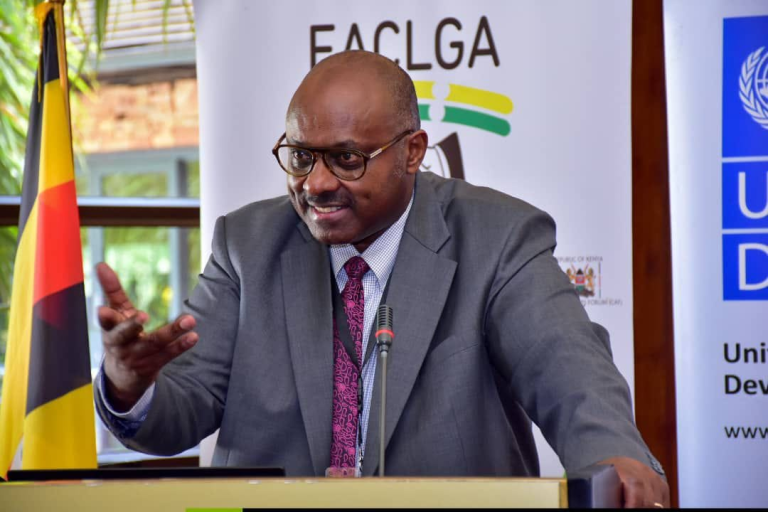
By the Permanent Secretary, Ministry of Local Government
The Local Council I (LC I) and Local Council II (LC II) structures remain the bedrock of Uganda’s decentralised system of governance. Since the introduction of decentralisation, Government has deliberately brought leadership and decision-making closer to the people, enabling communities to participate actively in identifying priorities, monitoring public services and holding leaders accountable. This has been demonstrated through the bold participation of citizens during the recent visits by the Ministers of Local Government to the Bugisu Sub-region, where communities openly exposed corrupt practices and demanded greater accountability.
As Uganda prepares for the Village (LC I) and Parish/Ward (LC II) elections, citizens have another opportunity to strengthen this democratic foundation by electing leaders of integrity, competence and commitment to public service. The Ministry of Local Government continues to champion decentralisation as an effective approach to promoting good governance, accountability, inclusive development and citizen participation. Through decentralisation, communities become active partners in development rather than passive beneficiaries.
The LC I and LC II Executive Committees are designed to ensure that every aspect of community life is represented through dedicated office bearers, including the Chairperson, Vice Chairperson, General Secretary, Secretary for Finance, Secretary for Defence and Security, Secretary for Production and Environmental Protection, and Secretary for Information, Education and Communication, Secretary for Youth Affairs, Secretary for Persons with Disabilities and Secretary for Women Affairs as provided for under the Local Governments Act. This structure ensures that residents know where to seek assistance on specific community matters while promoting inclusive, accessible and responsive local governance.
The LC I Executive Committee plays a central role in village administration by implementing council decisions, convening meetings, mobilising citizens to participate in government programmes, maintaining law and order, promoting sanitation and environmental protection, identifying vulnerable households for government interventions, safeguarding public property and monitoring service delivery. The Committee also serves as the vital link between communities and higher levels of Local Government by communicating local priorities and development needs.
LC I and LC II leaders occupy a unique position because they are the closest elected leaders to the people. Their understanding of community realities enables them to respond quickly to local concerns while ensuring that government programmes reach the intended beneficiaries. Their responsibilities extend beyond administration to mobilising communities to participate in national development initiatives such as the Parish Development Model (PDM), Emyooga, immunisation campaigns, environmental conservation and community sanitation programmes.
These leaders also play a crucial role in maintaining peace, security and social harmony. Working closely with security agencies and residents, they identify emerging security concerns, resolve neighbourhood disputes and promote peaceful coexistence. One of their most valuable responsibilities is resolving disputes involving land boundaries, family matters, domestic conflicts and other community disagreements before they escalate into lengthy and costly court processes. Through mediation and reconciliation, Local Councils strengthen social cohesion while reducing pressure on the formal justice system.
Equally important is their role in promoting transparency and accountability. As Government intensifies efforts to eliminate corruption, communities must recognise that the fight begins at the grassroots. Honest and vigilant Local Council leaders help safeguard public resources by verifying beneficiaries of government programmes, monitoring public projects and reporting cases of corruption, abuse of office and poor service delivery. The courage demonstrated by communities in exposing corruption during recent ministerial visits illustrates the important partnership between citizens and Government in strengthening accountability.
The forthcoming LC I and LC II elections therefore present an opportunity for communities to elect leaders who place public interest above personal gain. Citizens should carefully assess the character, honesty, commitment and track record of those seeking office. Communities deserve leaders who are approachable, accountable, hardworking and committed to serving all citizens without discrimination. Such leadership strengthens public trust and creates an environment where development programmes can succeed.
Decentralisation is founded on the principle that decisions affecting communities are best made with the active participation of those communities. Through elected Local Councils, citizens influence local priorities, participate in planning processes and contribute to monitoring government performance. This participatory approach strengthens democratic governance while enhancing community ownership of development initiatives.
The Ministry of Local Government remains committed to strengthening Local Councils through continuous policy support, capacity building and collaboration with other government institutions. Strong Local Councils translate into stronger Local Governments, improved service delivery, greater accountability and more responsive governance.
As Ugandans prepare to elect their next LC I and LC II leaders, every eligible voter has an important civic responsibility. Participating in these elections is not simply about choosing individuals to occupy leadership positions; it is about shaping the future of our communities. Every vote contributes to strengthening decentralisation, promoting peace and security, improving accountability and accelerating socio-economic transformation.
The Ministry of Local Government therefore encourages all eligible citizens to participate actively in the electoral process by offering themselves for leadership where qualified and by voting peacefully and responsibly. Together, through strong Local Councils and effective decentralisation, Uganda will continue to deepen democratic governance, improve service delivery and build resilient communities that drive sustainable and inclusive national development. The strength of our nation begins at the village and parish level, where citizens and their elected leaders work hand in hand to transform communities and realise Uganda’s development aspirations.