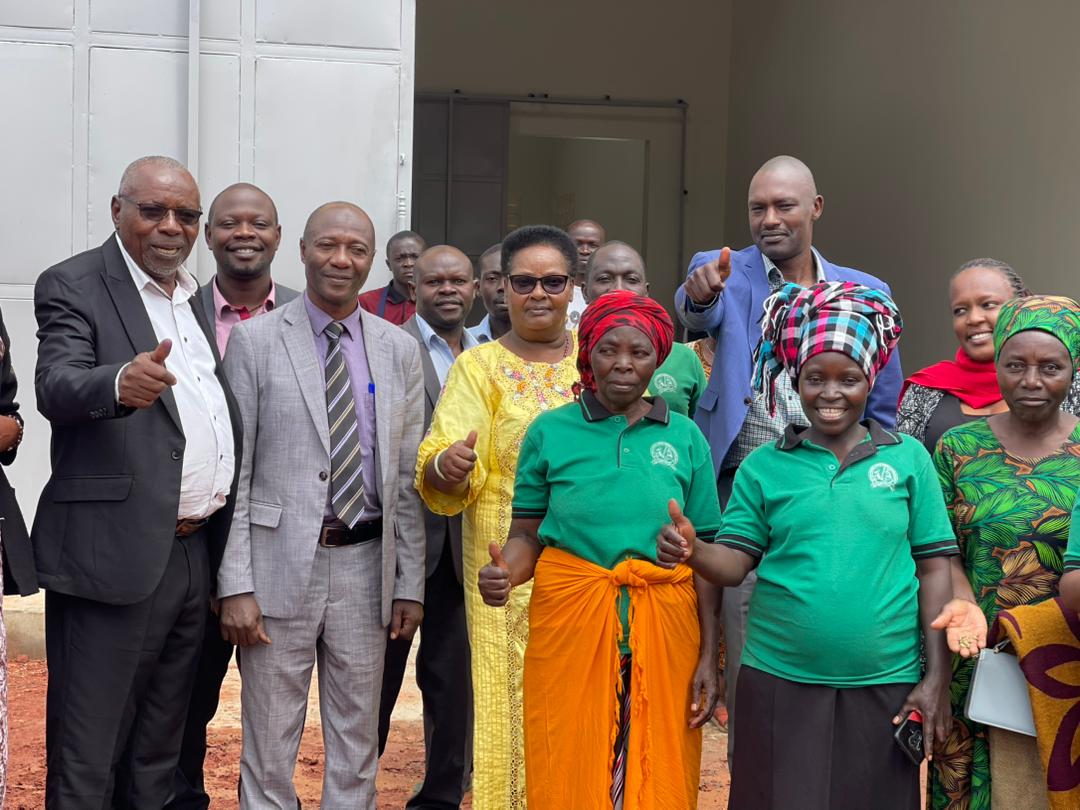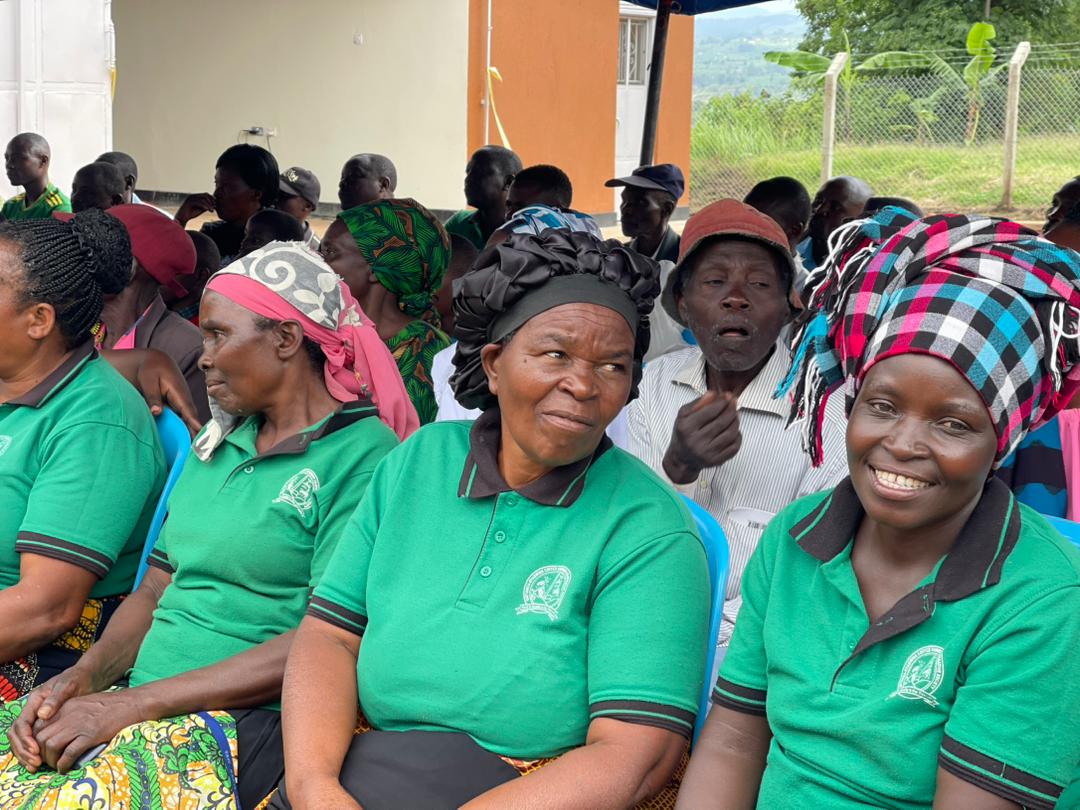

The Minister of State for Local Government, Victoria Rusoke Businge, has commissioned a modern coffee processing facility in Bunyangabu District under the Local Economic Growth Support (LEGS) Project, in a major step toward enhancing value addition and improving farmers’ earnings.
Constructed at a cost of over UGX 427 million, the facility has the capacity to process up to 2.5 tonnes of coffee per hour. It is expected to significantly improve the quality of coffee produced in the area, reduce farmers’ dependence on middlemen, and increase household incomes through better market prices.
Speaking at the commissioning ceremony, Hon. Rusoke urged farmers to scale up coffee production to ensure the facility operates at full capacity. She also encouraged farmer cooperatives to establish coffee nurseries to guarantee a steady supply of high-quality seedlings, which are essential for sustained productivity.
For years, coffee farmers in Bunyangabu have relied on middlemen, often transporting their produce to distant markets such as Kasese. This practice exposed them to exploitation and limited their ability to earn competitive prices due to poor post-harvest handling and lack of processing infrastructure.
Representing the farmers, Adonia Kimanywenda noted that producers previously sold a kilogram of coffee at between UGX 4,000 and 5,000. With the introduction of the new processing facility, prices are now expected to rise to approximately UGX 12,000 per kilogram—offering renewed hope for improved livelihoods and economic stability.
Representing the LEGS Project, Eng. Isaac Opolot called on the community to embrace ongoing government interventions designed to support agricultural productivity. He highlighted the e-voucher system, through which the government subsidizes 50 percent of the cost of agricultural inputs, as well as the establishment of community nurseries aimed at boosting coffee production to match the facility’s capacity.
The commissioning of the coffee facility adds to a series of investments already delivered in Bunyangabu District under the LEGS Project. These include the construction and rehabilitation of key community access roads such as the Bubwika–Yerya Bridge road and the Buhesi–Mitandi road, which have improved connectivity and access to markets.
Other interventions include the development of market infrastructure like the Kagera Market Shed, upgrades to the Nyamiseke–Mahoma road, and the Bunaiga Gravity Water Scheme—all aimed at strengthening local economic growth and improving livelihoods.
During the event, Hon. Rusoke also raised concern over increasing cases of teenage pregnancies and school dropouts in the district. She called on parents, leaders, and the wider community to prioritize education and protect the future of young people.
The district’s technical leadership, led by Chief Administrative Officer Nsubuga Hood, pledged continued support to farmers to ensure the proper management, sustainability, and full utilization of the facility.
The new coffee processing plant is expected to play a transformative role in Bunyangabu’s agricultural value chain, positioning farmers to benefit more from their produce while contributing to broader economic development in the region.
Constructed at a cost of over UGX 427 million, the facility has the capacity to process up to 2.5 tonnes of coffee per hour. It is expected to significantly improve the quality of coffee produced in the area, reduce farmers’ dependence on middlemen, and increase household incomes through better market prices.
Speaking at the commissioning ceremony, Hon. Rusoke urged farmers to scale up coffee production to ensure the facility operates at full capacity. She also encouraged farmer cooperatives to establish coffee nurseries to guarantee a steady supply of high-quality seedlings, which are essential for sustained productivity.
For years, coffee farmers in Bunyangabu have relied on middlemen, often transporting their produce to distant markets such as Kasese. This practice exposed them to exploitation and limited their ability to earn competitive prices due to poor post-harvest handling and lack of processing infrastructure.
Representing the farmers, Adonia Kimanywenda noted that producers previously sold a kilogram of coffee at between UGX 4,000 and 5,000. With the introduction of the new processing facility, prices are now expected to rise to approximately UGX 12,000 per kilogram—offering renewed hope for improved livelihoods and economic stability.
Representing the LEGS Project, Eng. Isaac Opolot called on the community to embrace ongoing government interventions designed to support agricultural productivity. He highlighted the e-voucher system, through which the government subsidizes 50 percent of the cost of agricultural inputs, as well as the establishment of community nurseries aimed at boosting coffee production to match the facility’s capacity.
The commissioning of the coffee facility adds to a series of investments already delivered in Bunyangabu District under the LEGS Project. These include the construction and rehabilitation of key community access roads such as the Bubwika–Yerya Bridge road and the Buhesi–Mitandi road, which have improved connectivity and access to markets.
Other interventions include the development of market infrastructure like the Kagera Market Shed, upgrades to the Nyamiseke–Mahoma road, and the Bunaiga Gravity Water Scheme—all aimed at strengthening local economic growth and improving livelihoods.
During the event, Hon. Rusoke also raised concern over increasing cases of teenage pregnancies and school dropouts in the district. She called on parents, leaders, and the wider community to prioritize education and protect the future of young people.
The district’s technical leadership, led by Chief Administrative Officer Nsubuga Hood, pledged continued support to farmers to ensure the proper management, sustainability, and full utilization of the facility.
The new coffee processing plant is expected to play a transformative role in Bunyangabu’s agricultural value chain, positioning farmers to benefit more from their produce while contributing to broader economic development in the region.